
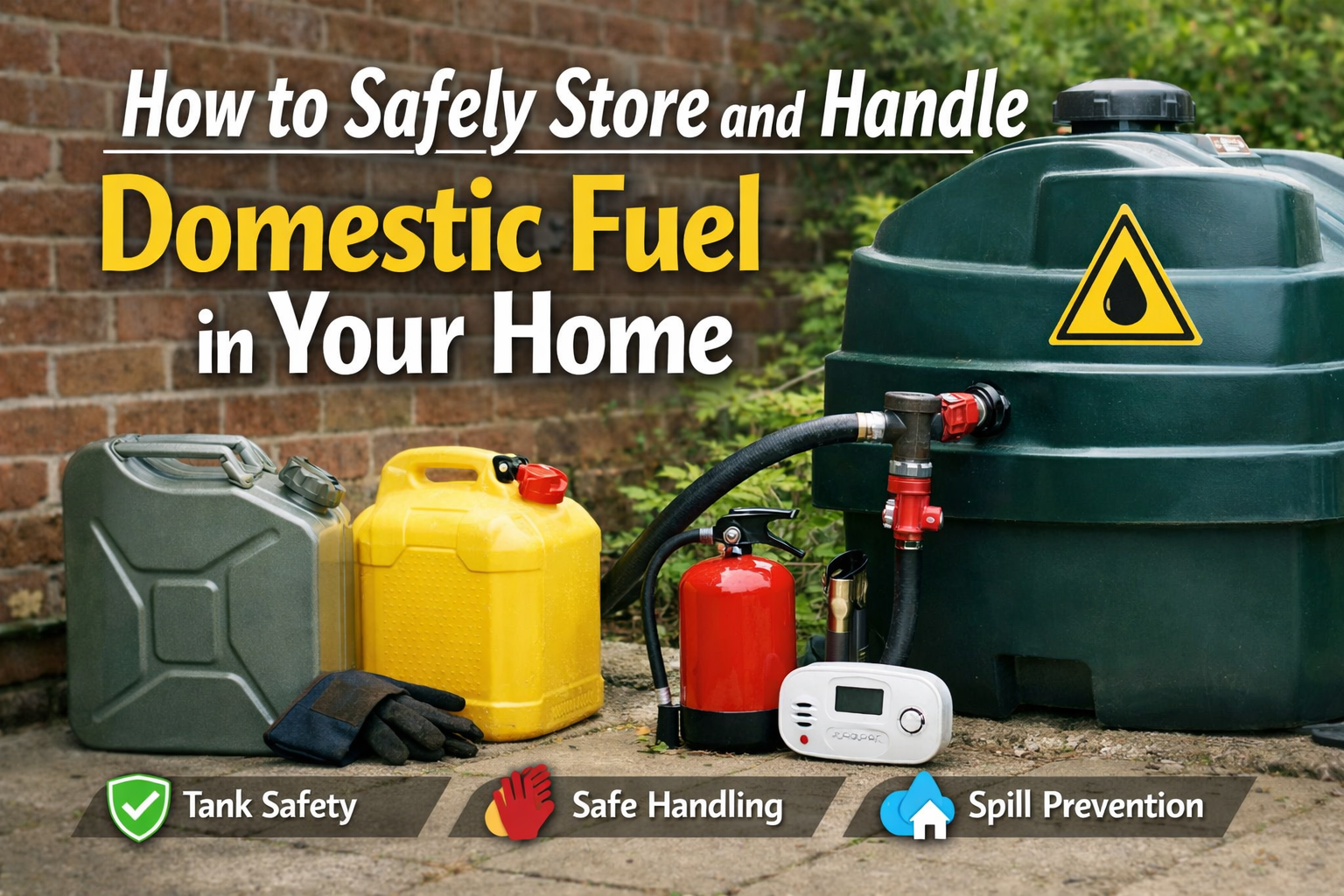
Keeping the storage of domestic fuel at the ideal level and using it in a proper way is good for the security and well-being of your home. To lower the risk of any hazard, you should understand the proper process of heating oil storage and using techniques whether you are using propane, diesel, gasoline, kerosene, or any other combination of oils for heating, or powering your equipment.
Any kind of improper level of storage and handling can result in explosions, fire, risk to health, contamination of the environment, and various legal liabilities.
This article will work as a guide to provide an across-the-board outline of the process of how to safely handle and store the oil for home heating .
Types of Fuel Containers Used at Home
For managing the proper use of fuel for the household you need to make a proper choice of fuel container. Fuel like Propane and gasoline are the kinds of fuels that make the empowerment of our daily work activities. The fuel containers can be underground tanks, above-ground tanks, portable containers, etc for heating oil storage.
Underground Tanks: The underground tanks are one of the vastly used heating oil storage containers. These types of tanks protect the fuel from the negative effects of sun, rain, and extreme temperature. They also decrease the risk of leakages. They are made from triple-wall polymer and fibreglass. Some of the underground fuel tanks extend the level of 55 feet.
Above-ground Tanks: The above-ground fuel tanks work for various fuel storage options. They provide easy maintenance and convenience. These tanks are made with materials like polyethylene and fibreglass. They are also available in different shapes and sizes.
Portable Containers: Portable containers have come up as the first choice of many people for fuel storage in the UK. They provide the advantage of quality and convenience of storage. They come in various sizes and they are made with materials like plastic. However, for using them you need to take some of the basic precautions.
Gasoline Containers: Gasoline containers have specially been prepared for the storage and transportation of gasoline. They are mainly prepared by HDPE or high-density plastics.
Kerosene containers: These containers have been designed for the storage of kerosene fuel and they are used in heaters, stoves, lamps, and many other forms of heating oil storage.
Diesel Canisters: The diesel canisters are the same as the gasoline containers and they are particularly designed to store the diesel.
Importance of Fuel Handling and Storage
Handling domestic fuel correctly is essential to avoiding dangers and accidents of any kind. These actions are necessary to safeguard the environment and conserve different resources. The current level of home heating fuels are very efficient and thus, the fuel storage tanks are needed to be kept clean and maintained. This is especially necessary for the modern fuel injection systems and their increased preciseness and sensitivity.
The effective level of fuel handling and domestic oil storage work for preventing any kind of spills and leaks and it also protects the fuel from theft. You should also adhere to the connected protocols for having the best storage and use of fuel. You should have the efficiency for managing the best operations of the fuel for use in your home.
How to Store and Handle the Fuel at Home
You should focus on handling and storing fuel for your home heating system in an efficient and safe manner. A number of factors are needed to be taken into account when handling and storing fuel. For this, you should have an appropriate kind of container of fuel and the container should be placed in an area which is well-ventilated.
Choosing the right type of container: For choosing the right type of fuel container you should evaluate the type and amount of fuel you need. Then verify the weight and capacity of the container.
Storing fuel in a well-ventilated area: You should store the fuel in an area that has proper ventilation. This will reduce the risks due to vapour build-up and any kind of explosion.
Fuel should be kept away from heat sources: Keep your fuel tank away from the sources of heat. These can be heating appliances, open flames, exhaust systems, and various appliances of electricity.
You should not overfill the container of fuel: Do not overfill the domestic fuel container as this can lead to spills and can create high levels of flames and hazards. This can also contaminate the soil and can lead to health issues.
Work on using the proper labelling: Always cheque that the tank is having proper labelling. A proper label will indicate the storage capacity and other advantages of the fuel tank.
Place the fuel tank in the correct location: You should keep the fuel tank in the correct location. This location should be far from the place that can easily catch fire.
Work with proper handling of the fuel: You should know the correct level of fuel and should know how it should be placed in the tank. You should also know the risk it carries as a result of imperfect maintenance of the heating oil storage.
Keep the flammable liquid away: Keep the fuel tank away from alcohol, any kind of paint thinners and solvents, turpentine, kerosene, etc.
Make the regular verification of the fuel container:Regularly verify the fuel tank like if it has any leaks, damage, or spills.
Risks of Improper Huel Storage
The improper level of domestic fuel storage and usage can have severe levels of results for different people, environments, and communities. Thus, you should follow the rules of proper practises of storage and utilisation of home heating fuel.
Hazard of fire: The fuel of your tank can have a high level of flames and if you do improper storage this can lead to fire. An accident can happen if the tank is near to an open flame.
Risk of explosion: The fuel vapours can increase the risk of explosion and thus, they should be kept in a safe place. Any small kind of heat can result in an explosion.
Damage of the property: If your home catches fire due to the improper use of a fuel tank you can easily have the damage and loss of the property you have.
Risk of health and environment: If the oil tank of home heating is not used properly the leakage and spills can lead to risk of environmental damage and many health issues.
Legal and regulatory issues: You can also face the issues of legalities if any accident occurs or damage is caused by the improper use of a fuel tank.
Risk of theft: You should keep the fuel tank in a proper location and this can lead to reduced risk of theft.
Challenges in insurance: Any unprepared use of a fuel tank that leads to an accident can make challenges for you to get insurance coverage.
Six Tips About Rules to Properly Use the Home Heating Oil in the UK and Cut the Cost
| Tips | How to cut oil costs and use them effectively ? |
| Tip #1 | Examine and check the costs and don’t be reluctant to bargain.
|
| Tip #2 | To receive even more savings, think about starting or joining an oil club.
Purchase when the warmer months are going on. |
| Tip # 3 | Maintain and manage your tank properly.
|
| Tip # 4 | Install a type of boiler that is efficient.
|
| Tip # 5 | If you are able, make a comparison of different oil prices.
|
| Tip # 6 | Maintain your tank properly.
|
Fuel Storing and Handling with Regulatory Compliance
In the UK the average home heating oil used in households is around 26,999 kWh and this can be described as near about 1,700 to 1,800 litres of heating oil.
The process of fuel use and storage should be done with regulatory compliance. In this, the users should adhere to all the safety protocols of heating oil storage. They should work for environmental protection measures and many of the legal standards.
Know the relevant rules and regulations: You should know all the rules and regulations that are needed to use the fuel tank and home heating fuel. These can be building security codes, environment protection concerns, the rules of fire safety, the rules of gas safety, and the process of using carbon monoxide detectors.
Use the containers that have received approval for safe use: The container that you are using for domestic fuel storage should get approval from the legal authorities for fuel storage and use for home heating.
Maintain and manage all the documentation: The regulations for home heating oil in the UK say that your oil tank should hold oil of about 3,500 litres. Anything more than this should consider and follow the business rules. You should always be prepared with proper kinds of documentation for storing fuel at home.
Make safe disposal of fuel: You should contact authorised fuel disposal facilities and their experts. You need to talk to them to make the safe disposal of the fuel from your tank.
Stay informed about the changing patterns of various rules: You should have all the information that is related to the storage and handling of domestic fuel in your home. In the UK when the outside temperature drops by one degree Celsius, the sleeping rooms should be kept at 18°C and the living rooms should be at 21°C.
Work for the training for the users: The service providers should arrange training sessions for their employees and the users to let them know about the changes in the safety protocols of using and storing home heating oil.
Follow all of the safety measures: Keep the home heating system 8m away from non-fire-rated buildings or structures, 8 m away from places like windows and doors, and 8m away from oil-fired heating appliances. These are the important steps that have to be taken for managing heating oil storage.
Conclusion
In summary, this can be said that the safe storing and handling of domestic fuel is a need for the well-being of the household and environment. You should handle the fuel tank with good care and avoid overfilling and spills. Always take advice from experts about the proper use of home heating oil. Work on taking the initiative to install the carbon monoxide detectors inside the house.

![Epoxy Curing Agents Market Growth Analysis Report | Industry Status, Market Opportunities, Key Challenges, Competitive Strategies, Revenue Breakdown, and Forecast Outlook [2025–2034]](https://driftelano.com/wp-content/uploads/2025/12/Epoxy-Curing-Agents-Market.jpg)
![EMI Shielding Market Insights and Analysis [2025–2034] | Industry Performance, Growth Opportunities, Risk Factors, Strategic Developments, and Long-Term Market Projections](https://driftelano.com/wp-content/uploads/2025/12/EMI-Shielding-Market.jpg)

![Dimethyl Ether (DME) Market [Latest Reports] | Business Environment Analysis, Corporate Strategies, Competitive Benchmarking, Investment Trends, and Emerging Market Developments [2025–2034]](https://driftelano.com/wp-content/uploads/2025/12/Dimethyl-Ether-DME-Market.png)
Leave a Reply