
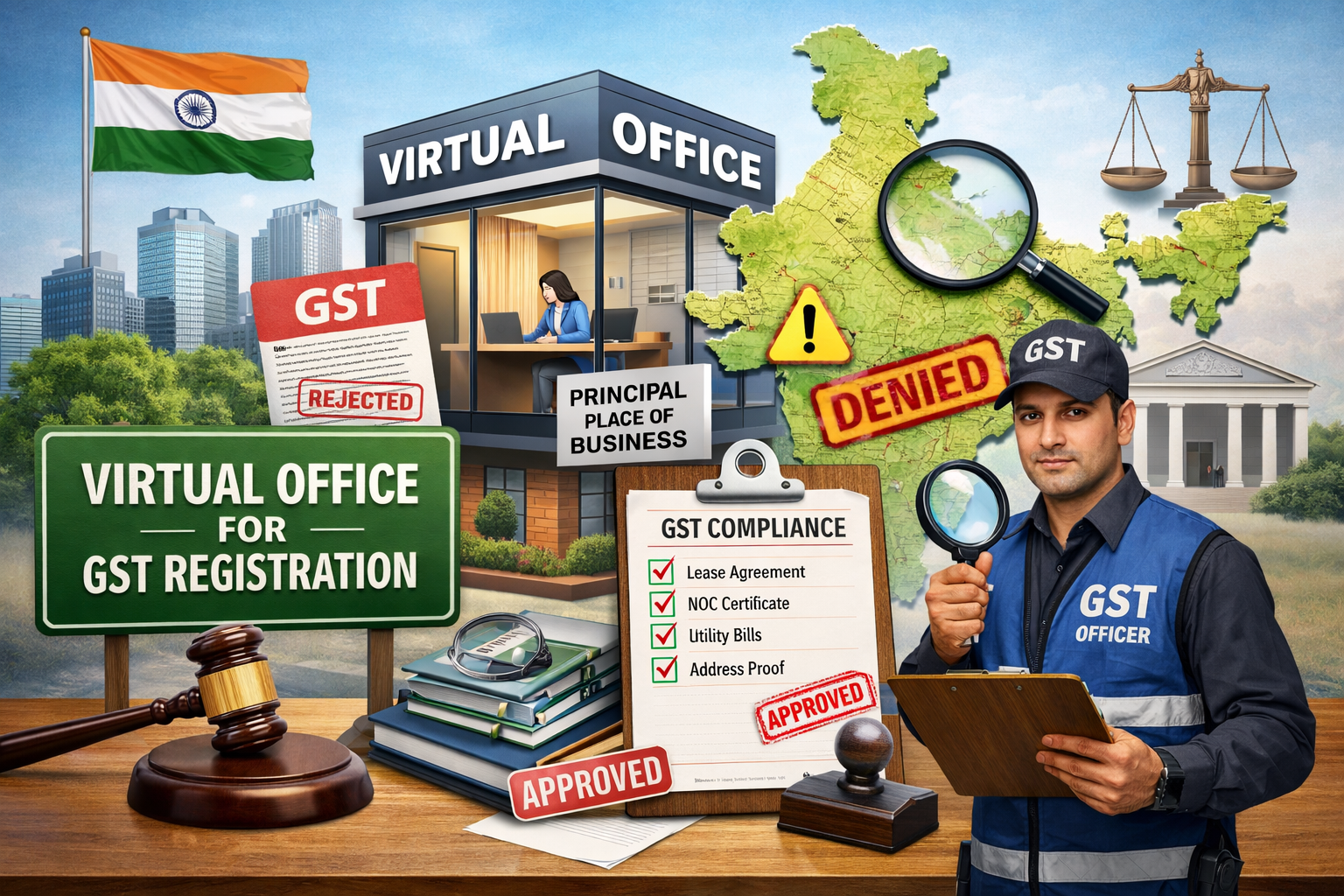
In the last few years, there has been a substantial rise in the number of startups, digital entrepreneurs, consultants, and multi-state operators in India that are looking for flexible infrastructure solutions. Of them, virtual offices have become a good alternative to actual office premises. But as more people use it, regulators are paying more attention to it. Companies need to stop worrying about saving money and start worrying about following the regulations, especially when they utilize a virtual office for gst registration and do other legal things.
This article explains what a compliance-first approach is, why it’s necessary, and what Indian businesses need to do when they set up virtual offices.
What the Compliance Lens for Virtual Offices Means
A virtual office is a simple way for a business to have an address and administrative services without having to rent a full-time office. This concept is allowed in India, but regulatory authorities don’t like the idea of a “virtual” presence in general. Instead, they check the address for documentation control, legal possession, and operational accountability.
When a business registers for GST using a virtual office, the GST department checks to determine if the address is a lawful place of business and that the business has the proper documents and approval.
A compliance-first approach makes sure that the virtual office is more than simply a paper address; it is also a place of business that can be defended in court.
Why Compliance Is No Longer Up for Debate
Because there have been more and more incidents of false registrations, circular billing, and firms that don’t exist, tax offices all around India have made verification considerably tighter. This means that registrations with weak or unverifiable addresses are more likely to be turned down, put on hold, or canceled.
Without compliance protections, a business that employs a virtual office could be at danger of:
• GST registration rejection
• Failure to verify physically
• Suspension under Rule 21 of GST Rules
• Blockage of Input Tax Credit
• Notices to show cause and a review by the department
A compliance-first architecture lowers these risks by making sure that using a virtual office is always legal.
Are virtual offices allowed in India?
Using shared or managed office space is not against the law in India. But the legality of the address relies on how it is used and what papers support it.
The law specifies that for GST purposes, you need to list a “Principal Place of Business” or “Additional Place of Business” and present confirmation that you own or have the right to use the space.
It is permissible to register for GST at a virtual office if:
• The address is a business or appropriate business location
• The applicant has the legal authority to use the space
• The relevant documents are real, up-to-date, and can be validated
• The address can reply to official communication
If any of these elements are missing, the registration might not go through.
Papers That Clearly Show Compliance
From a regulatory point of view, the most crucial component of compliance is keeping records. Authorities typically use documents as proof during the approval, audit, and inquiry processes.
A business that wants to register for GST in a virtual office needs the following papers:
1. A legitimate license or leasing agreement
The agreement must clearly say that the business can use the property and be legally binding.
2. Owner’s No Objection Certificate (NOC): This shows that the owner of the property approves to the business being run from that address.
3. The bill for the building’s utilities
Bills for water or electricity prove that the property is real.
4. Records that back up an address
These could be property tax receipts or maintenance invoices, depending on the state.
A compliance-first strategy makes sure that these papers are not merely generic templates, but are tailored to the address, consistent, and ready for an audit.
The Truth Check: Physical Verification
Physical verification is something that people who operate in a virtual office don’t think about very often. Before or after a site is registered, GST officers might look at it.
During verification, officers normally check:
If the place truly exists
If there is signage or identification
If the documents match the actual premises
If access or coordination is possible
A compliant virtual office provider makes sure that the facility can manage this type of verification. Companies that use addresses that can’t be verified or are too long are more likely to get their accounts suspended.
GST Isn’t the Only Thing That Matters for Compliance
GST is still the most sensitive area, although virtual office compliance also pertains to other rules and regulations:
Company Registration: The registered office’s address must be able to get legal notices.
Getting a Bank Account: Banks need to check your address and may undertake their own checks.
Income Tax Correspondence: Notices and other messages must be properly sent and received.
Registrations that are only for that state: As part of the registration procedure, shops and businesses typically have to pass local inspections.
A virtual office approach that puts compliance first takes all of these things into account, not just receiving GST permission.
The Risks of a Cost-Only Strategy
A lot of firms merely adopt virtual office solutions because they are cheap, not because they meet regulatory criteria. This usually indicates that you will save money in the near term but be more open to rules in the long term.
Some common reasons people don’t obey the rules are:
Addresses that are shared with too many people
Contracts that aren’t signed or finished
Utility bills that are no longer legitimate
No local help during inspections
No one is liable after registration is done
On the other hand, a compliance-first approach puts low pricing behind legal sustainability.
What Professional Due Diligence Does
Businesses should conduct their research before signing any virtual office contracts. This includes checking:
The provider’s legal ownership or permission
The address’s past acceptance by authorities
The forms and coherence of the papers
Support during exchanges between departments
When you sign up for GST, you should consider about picking a virtual office as a regulatory choice, not just an administrative one.
The best strategies for companies to get things done
Businesses should follow these best practices to stay compliant while using virtual offices:
Always keep copies of all address documentation up to date
Make sure the address you use matches the business activity you declared
Respond swiftly to official mail
Don’t change your address too often without a solid cause
Only work with suppliers that put compliance support first
These techniques make it much less likely that you’ll run into problems with the law.
Last thoughts: Compliance as a valuable business tool
Virtual offices are no longer a strange idea in India; they are now a typical technique for firms to set up their offices. But businesses can only be tolerant of rules when they are honest, open, and respect the law.
A virtual office for GST registration is more than simply a place to send your tax forms; it’s also a way to show the tax authorities that you are responsible. Businesses who put compliance first obtain stability, trust, and the freedom to conduct their business for a long time.
In a world where people are paying more attention, compliance is no longer just a box to tick. It is a strategic asset that determines if a corporation can grow without any issues.

![Epoxy Curing Agents Market Growth Analysis Report | Industry Status, Market Opportunities, Key Challenges, Competitive Strategies, Revenue Breakdown, and Forecast Outlook [2025–2034]](https://driftelano.com/wp-content/uploads/2025/12/Epoxy-Curing-Agents-Market.jpg)
![EMI Shielding Market Insights and Analysis [2025–2034] | Industry Performance, Growth Opportunities, Risk Factors, Strategic Developments, and Long-Term Market Projections](https://driftelano.com/wp-content/uploads/2025/12/EMI-Shielding-Market.jpg)


![Dimethyl Ether (DME) Market [Latest Reports] | Business Environment Analysis, Corporate Strategies, Competitive Benchmarking, Investment Trends, and Emerging Market Developments [2025–2034]](https://driftelano.com/wp-content/uploads/2025/12/Dimethyl-Ether-DME-Market.png)
Leave a Reply