
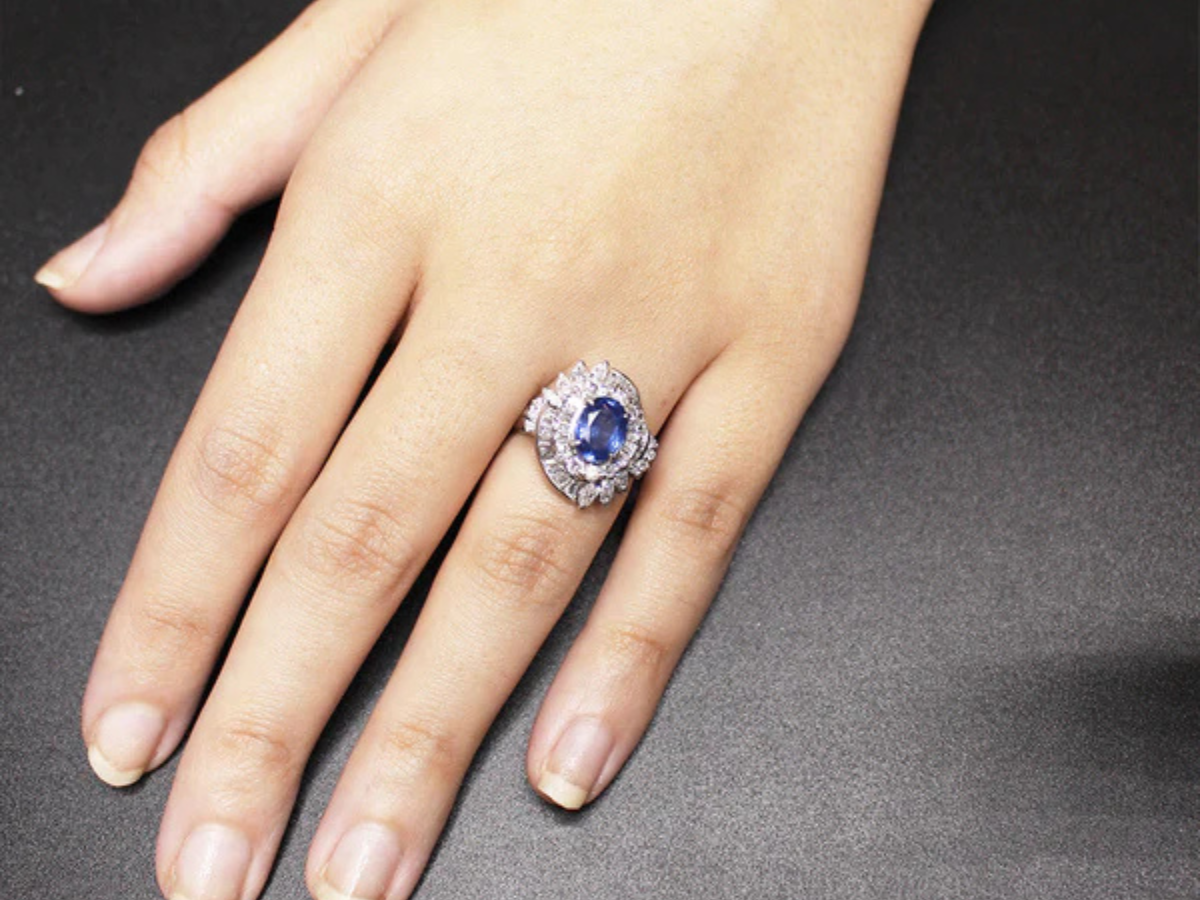
Buying a diamond ring is a significant moment. It’s a symbol of love, commitment, and a major life milestone. But let’s be honest, it can also be overwhelming. With so much information, endless options, and a wide range of prices, it’s easy to feel lost. You want to find that perfect piece that captures your feelings without emptying your bank account. This guide is here to help you do just that.
We will walk you through everything you need to know, from understanding the basics of a diamond’s quality to setting a realistic budget. By the end, you’ll feel confident and prepared to make a smart purchase. You can find a beautiful ring that you and your partner will cherish for a lifetime, all without the stress of overpaying.
Understanding the Four Cs
The first step in your journey is learning about the “Four Cs”: Cut, Color, Carat, and Clarity. These are the universal standards for judging a diamond’s quality and value. Grasping these concepts will empower you to compare options and understand exactly what you’re paying for.
Cut: The Source of Sparkle
Many people think “cut” refers to the diamond’s shape, but it actually describes how well the diamond’s facets interact with light. A well-cut diamond will capture light and reflect it back, creating that brilliant sparkle we all love. A poorly cut diamond, on the other hand, will look dull and lifeless, no matter its color or clarity.
Cut is graded on a scale from Excellent to Poor. For the best value, aim for a cut grade of Very Good or Excellent. This ensures your diamond has maximum fire and brilliance. An excellent cut can even make a diamond with slightly lower color or clarity grades appear more stunning. Prioritizing the cut is one of the smartest ways to get a beautiful stone for your money.
Color: A Hint of Tint
Diamond color is graded on a scale from D (colorless) to Z (light yellow or brown). Truly colorless diamonds (D-F) are the rarest and most expensive. However, you don’t need a D-grade diamond to get a beautiful ring.
Diamonds in the G-J range are considered “near-colorless.” To the untrained eye, they appear white and offer fantastic value. The difference between a G and an H color diamond is often undetectable without a side-by-side comparison under a magnifier. Choosing a near-colorless diamond is a great strategy for saving money without sacrificing beauty.
Clarity: The Diamond’s Fingerprint
Clarity refers to the absence of internal flaws (inclusions) and external blemishes. The clarity scale ranges from Flawless (FL) to Included (I). Just like with color, you don’t need a flawless diamond for it to be stunning.
Diamonds graded as “Slightly Included” (SI1 and SI2) or “Very Slightly Included” (VS1 and VS2) have imperfections that are typically not visible to the naked eye. These are called “eye-clean” diamonds. Opting for an eye-clean SI1 or SI2 diamond can save you a significant amount of money compared to a VVS or Flawless stone, and it will look just as perfect once it’s set in a beautiful Diamond ring.
Carat: More Than Just Size
Carat is a measure of a diamond’s weight, not its size. While a higher carat weight generally means a larger diamond, the cut can also influence how large a diamond appears. A well-cut 0.9-carat diamond might look bigger than a poorly cut 1.0-carat diamond.
To get more for your money, consider buying just shy of the popular carat weights. For example, a 0.90-carat diamond can cost significantly less than a 1.0-carat diamond, but the size difference is nearly impossible to spot. This simple trick can lead to substantial savings.
Setting a Realistic Budget
Before you start shopping, you need a budget. The old rule of spending two or three months’ salary is outdated and unrealistic. The right amount to spend is what you feel comfortable with. This purchase is about celebrating your love, not starting your new life together in debt.
Once you have a number in mind, stick to it. It’s easy to get caught up in the excitement and be tempted to overspend. A firm budget will help you focus your search on options that are genuinely within your reach. Remember, a thoughtful, well-chosen Diamond ring is more meaningful than an expensive one you can’t afford.
Choosing the Right Shape and Setting
Beyond the Four Cs, the shape of the diamond and the design of the setting play a huge role in the final look and cost of the ring.
Popular Diamond Shapes
The most popular shape is the Round Brilliant, known for its incredible sparkle. However, other shapes, often called “fancy shapes,” can be just as beautiful and often more affordable. Shapes like Oval, Princess, Cushion, and Emerald offer a unique look. Ovals and Marquise cuts, for instance, can appear larger than a Round diamond of the same carat weight due to their elongated shape. Exploring different shapes is a great way to find a bigger look for your budget.
The Impact of the Setting
The setting is the metal framework that holds the diamond in place. It protects the stone and enhances its beauty.
- Solitaire: A classic setting with a single diamond. It’s elegant and timeless.
- Halo: A central diamond surrounded by a circle of smaller diamonds. A halo setting can make the center stone appear much larger and adds extra sparkle.
- Pavé: Small diamonds are set into the band, creating a continuous line of brilliance.
The type of metal you choose also affects the price. Platinum is the most expensive, followed by gold (white, yellow, or rose). White gold offers a similar look to platinum at a lower cost. A simple setting will always be more affordable than an intricate one with many smaller diamonds.
Smart Shopping Strategies
Knowing what to look for is half the battle. Knowing where and how to shop is the other half. Here are some tips to ensure you get the best value.
Compare Prices Online and In-Store
Don’t buy the first ring you see. Take the time to compare prices from different retailers, both online and in physical stores. Online jewelers often have lower overhead costs, which can translate into better prices for you. However, many people value the experience of seeing a Diamond ring in person before buying. Do what feels right for you, but be sure to shop around.
Always Ask for a Grading Report
Insist on a diamond grading report from a reputable gemological lab, such as the Gemological Institute of America (GIA) or the American Gem Society (AGS). This report is an official document that details your diamond’s Four Cs. It’s your proof that the diamond is what the seller claims it is. A Diamond ring without a credible certificate is a risky purchase.
Consider a Lab-Grown Diamond
For a modern and budget-friendly alternative, consider a lab-grown diamond. These diamonds are physically and chemically identical to mined diamonds—they are real diamonds. The only difference is their origin. Because they are created in a controlled environment, they often cost 30-50% less than their natural counterparts. This allows you to get a larger or higher-quality stone for the same budget, making it an excellent option for a beautiful Diamond ring.
Final Thoughts on Your Purchase
Buying the perfect Diamond ring is a journey, not a race. Take your time, do your research, and trust your instincts. Focus on what matters most to you and your partner, whether that’s the sparkle of the cut, the size of the stone, or the uniqueness of the design.
By understanding the Four Cs, setting a realistic budget, and shopping wisely, you can find a ring that is both breathtaking and affordable. The value of a Diamond ring isn’t just in its price tag; it’s in the love and commitment it represents. Armed with this knowledge, you are ready to make a choice you’ll be proud of for years to come. Your perfect Diamond ring is out there, waiting for you to find it.

![Epoxy Curing Agents Market Growth Analysis Report | Industry Status, Market Opportunities, Key Challenges, Competitive Strategies, Revenue Breakdown, and Forecast Outlook [2025–2034]](https://driftelano.com/wp-content/uploads/2025/12/Epoxy-Curing-Agents-Market.jpg)
![EMI Shielding Market Insights and Analysis [2025–2034] | Industry Performance, Growth Opportunities, Risk Factors, Strategic Developments, and Long-Term Market Projections](https://driftelano.com/wp-content/uploads/2025/12/EMI-Shielding-Market.jpg)
![Dimethyl Ether (DME) Market [Latest Reports] | Business Environment Analysis, Corporate Strategies, Competitive Benchmarking, Investment Trends, and Emerging Market Developments [2025–2034]](https://driftelano.com/wp-content/uploads/2025/12/Dimethyl-Ether-DME-Market.png)
Leave a Reply