
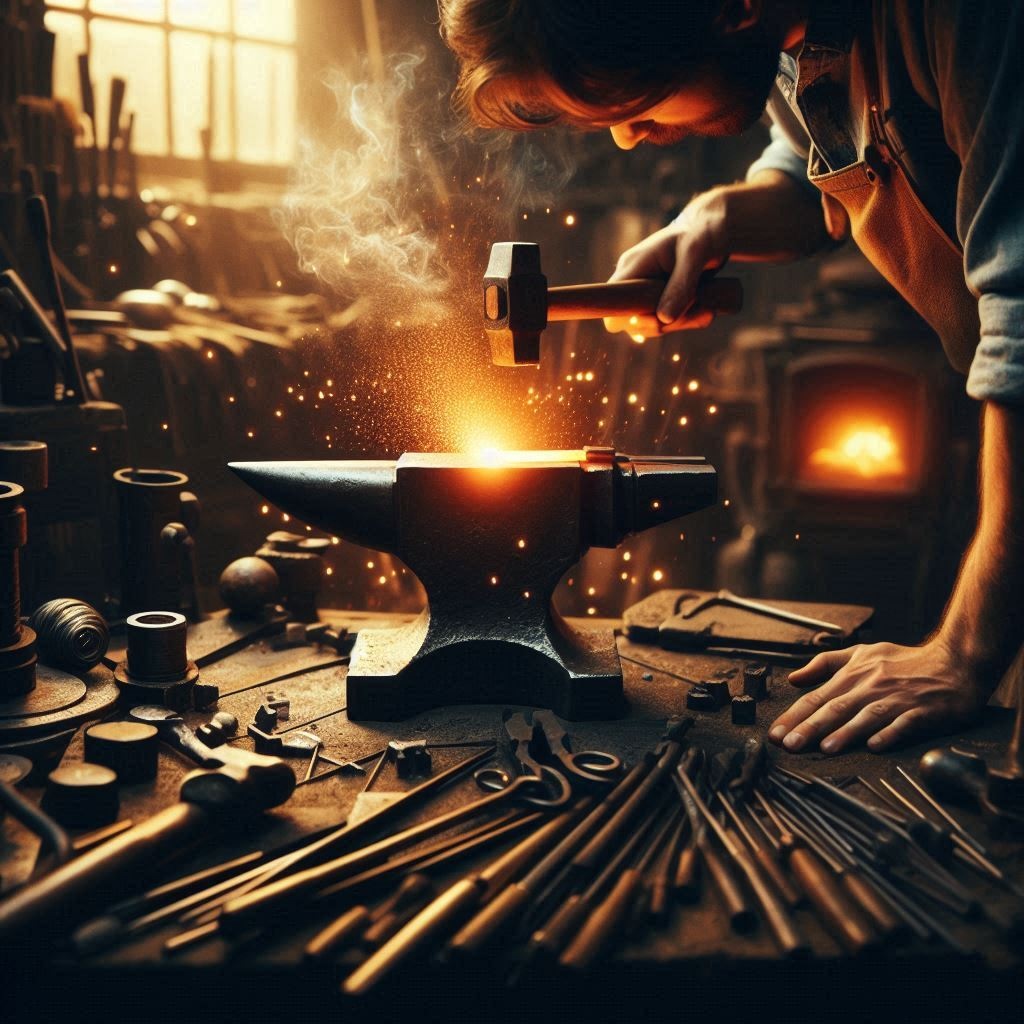
The process of precision forging is an advanced method of creating components from metal, with high precision, high quality surface finish and excellent mechanical properties. By using the precision forging process, the shape of the metal is nearly complete before it enters the manufacturing stage, while conventional forging processes typically require further machining to be manufacturing-ready.
Using controlled force, controlled temperature and special dies, the process for achieving precision forged components is known for producing pieces that are consistently formed in the same way and have identical shapes. Numerous industries depend heavily on precision forging; automobile, aerospace, military, heavy engineering all require strong, reliable components made through this process.
Why Does High-Performance Component Manufacture Use Precision Forging?
Placing value on precision forging to manufacture high performance component means to enhance the structural integrity and reliability of the component. By utilizing the method of precision forging, there is a synergy between the metal’s grain flow and its final shape; therefore, there is an increase in overall strength, fatigue resistance, and load-bearing capabilities.
Precision forged products are manufactured with precision to provide the highest degree of consistent quality and the lowest number of defects and maximum mechanical performance compared to those made by casting or machining.
Which Materials Are Used for Precision Forging?
Precision forgings come in a wide variety of Metals and Alloys to accommodate the needs of a variety of Applications throughout the industry. Carbon Steel is typically selected in the Structural and Automotive Segments due to its high Strength and low Manufacturing Costs. High-Strength, Wear-Resistant Alloy Steel is Preferred for Applications with High Load Requirements. Stainless Steels are selected in Applications where Corrosion Resistance and Durability are Paramount. Aluminum Alloys are used in Lightweight Applications that require High Strength and Increased Level of Fuel Efficiency. Titanium Alloys are preferred in Aerospace and Medical Applications for Their Outstanding Strength-to-Weight Ratios and Corrosion Resistance. Copper and Brass are often used in Applications involving Part Manufacturing with a High Degree of Electrical and Thermal Conductivity. All Material Selections are Based on Performance Specifications, Operating Environments, Weight Restrictions, and Total Manufacturing Cost.
Different Types of Precision Forging
The process of precision forging can be broken down into many classifications depending on the forming temperature, die design and production requirements of the items being forged. There are three main types of precision forging: hot precision forging, cold precision forging and warm precision forging. Hot precision forging involves forming metal above its recrystallization temperature. This allows for greater material flow and is ideal for manufacturing very large and complex components. Cold precision forging occurs at or about room temperature and produces components with very fine surfaces, highly accurate dimensions, and increased overall strength due to work-hardening. Warm precision forging takes place at a temperature between the two extremes; it has some of the benefits of both hot and cold processes, not requiring great forming forces while producing good accuracy. The concept of closed-die precision forging involves using female and male dies to create almost-net-shape parts with little to no waste. Flashless precision forging is an extremely controlled process that eliminates the creation of excess materials, so the material use is maximized and the parts’ geometry remains uniform.
Advantages of Precision Forging
In the manufacturing industry, precision forging has several technical and economic advantages that make it a preferred manufacturing solution for challenging industrial markets. It achieves a high level of dimensional accuracy and provides close tolerance fit; therefore, the components that are produced from precision forging provide an improved ability to resist fatigue, as well as having better mechanical properties due to their enhanced grain structure, providing superior material integrity. With precision forging producing near-net-shape parts, there is very little material waste and therefore minimal requirement for secondary machining operations, allowing for greater consistency of quality when manufacturing components at high-volume production. In addition, precision forgings have been shown to provide a superior surface finish compared to conventional forging processes; therefore, due to the combination of all of these advantages, the precision forging process is typically more efficient than other forging processes, thus lowering manufacturing cost throughout the entire product life cycle and therefore providing manufacturers with a preferred manufacturing method for providing high-performance components.
Applications of Precision Forging in Different Sectors
Precision forged products can be found in a variety of applications across many industries and provide high-strength, dependable and accurately engineered components. The automotive industry produces crankshafts, gears, connecting rods, transmission components and steering parts by using precision forged components that are specifically formulated to support high-load and long-term use. The use of precision forged components by the aerospace industry includes structural parts for aircraft, components for landing gear, engine components and fasteners where weight reduction, strength and reliability are important factors. The defense industry needs precision forged components for weapon systems, armored vehicles, and mission critical mechanisms that are designed to survive in very harsh conditions. Precision forged components are used in industrial machinery with items like shafts, flanges, couplings and tools in heavy engineering and manufactured equipment. The energy and power industries incorporate precision forged components in turbines, generators, wind energy, and Oil and Gas equipment. Precision forged components are used in the medical and electronics industries for surgical instruments, implants, and specialty electronics that require high precision and material integrity.
Conclusion
Precision forging has become an increasingly popular way of producing highly complex and custom metal components, due to the increasing need for high-performance metal components. Precision forging is more effective than traditional manufacturing Methods like casting and extensive machining in terms of producing stronger, more accurate, and more consistent parts.
As a result of producing near-net-shape components with a variety of materials, precision forging continues to be an important manufacturing method in the Automotive, Aerospace, Defense and Industrial Industries. In addition, Precision Forging will play a vital role in producing High-Performance, Light Weight and Efficient, Sustainable Metal Components as these industries develop more advanced Technologies.

![Epoxy Curing Agents Market Growth Analysis Report | Industry Status, Market Opportunities, Key Challenges, Competitive Strategies, Revenue Breakdown, and Forecast Outlook [2025–2034]](https://driftelano.com/wp-content/uploads/2025/12/Epoxy-Curing-Agents-Market.jpg)
![EMI Shielding Market Insights and Analysis [2025–2034] | Industry Performance, Growth Opportunities, Risk Factors, Strategic Developments, and Long-Term Market Projections](https://driftelano.com/wp-content/uploads/2025/12/EMI-Shielding-Market.jpg)

![Dimethyl Ether (DME) Market [Latest Reports] | Business Environment Analysis, Corporate Strategies, Competitive Benchmarking, Investment Trends, and Emerging Market Developments [2025–2034]](https://driftelano.com/wp-content/uploads/2025/12/Dimethyl-Ether-DME-Market.png)
Leave a Reply