
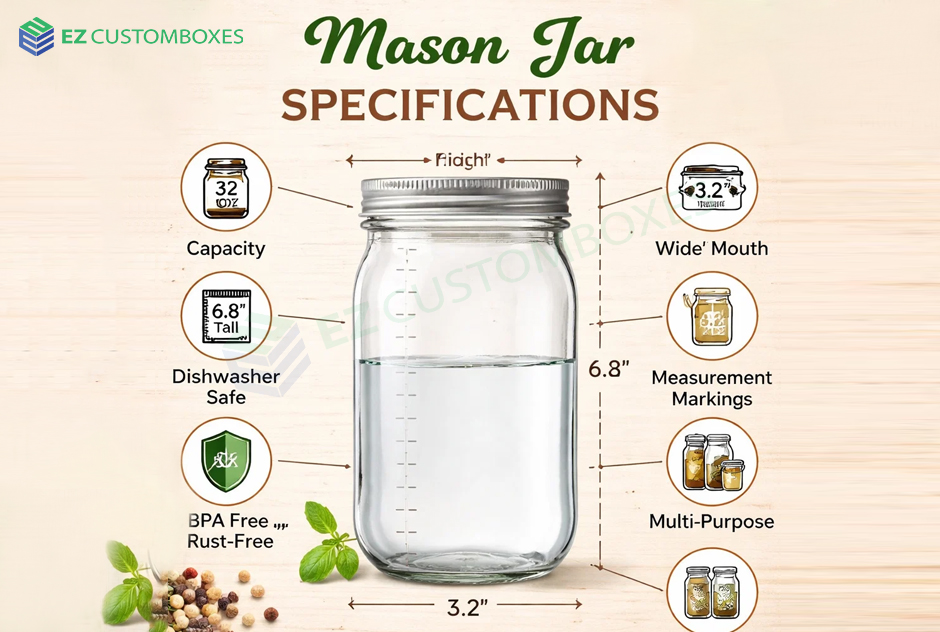
Mason jar specifications are essential to understand if you use jars for food storage, canning, beverages, crafts, or packaging. Choosing the right jar size, mouth type, and lid ensures safety, freshness, and convenience. Whether you’re a home canner, small business owner, or packaging buyer, this guide breaks down mason jar dimensions, materials, and uses in a simple, reliable way—based on real-world standards and best practices.
What Are Mason Jar Specifications? (Featured Snippet Ready)
Mason jar specifications include the jar’s capacity (oz/ml), height, diameter, mouth type (regular or wide), glass thickness, and lid compatibility. These details help users choose the right jar for food preservation, storage, or commercial use.
Standard Mason Jar Sizes and Capacities
Mason jars size come in standardized, making them easy to match with lids and accessories.
Common Mason Jar Sizes
-
4 oz (118 ml): Spices, samples, jams
-
8 oz (237 ml): Jelly, sauces, candles
-
12 oz (355 ml): Drinks, desserts
-
16 oz / Pint (473 ml): Food storage, beverages
-
24 oz (710 ml): Smoothies, soups
-
32 oz / Quart (946 ml): Canning vegetables, bulk storage
-
64 oz / Half-Gallon (1.9 L): Dry goods, fermentation
Mason Jar Dimensions by Size
Exact dimensions may vary slightly by brand, but these are industry averages.
Mason Jar Dimension Chart
-
8 oz: ~3.5 in height × 2.75 in diameter
-
16 oz (Pint): ~5 in height × 3 in diameter
-
32 oz (Quart): ~6.9 in height × 3.4 in diameter
-
64 oz: ~9.5 in height × 4 in diameter
Knowing dimensions is important for shelf space, packaging, and shipping.
Regular Mouth vs Wide Mouth Mason Jars
Regular Mouth Mason Jars
-
Opening: ~2.5 inches
-
Best for liquids and pouring
-
More controlled access
Wide Mouth Mason Jars
-
Opening: ~3 inches
-
Easier filling and cleaning
-
Ideal for canning whole foods
Both types use two-piece lids (flat lid + screw band).
Materials and Build Quality
Mason jars are made from thick, food-grade glass designed to handle temperature changes.
Key Material Features
-
BPA-free glass
-
Heat-resistant for canning
-
Reusable and recyclable
-
Odor- and stain-resistant
This makes mason jars a trusted, long-term storage solution.
Common Uses of Mason Jars
Mason jars are versatile and widely used in homes and businesses.
Popular Applications
-
Home canning and food preservation
-
Beverage containers
-
Pantry and bulk storage
-
Fermentation (pickles, kombucha)
-
Candles and crafts
-
Eco-friendly packaging for small brands
FAQs About Mason Jar Specifications
What size mason jar is best for canning?
Quart (32 oz) and pint (16 oz) jars are most commonly used for canning.
Are mason jars heat-safe?
Yes, they are designed for boiling-water and pressure canning when used correctly.
Do all mason jars use the same lids?
No. Regular-mouth and wide-mouth jars require matching lid sizes.
Are mason jars food-safe for commercial use?
Yes, when sourced from certified manufacturers and used properly.
Can mason jars be reused?
Yes. Jars are reusable; lids should be replaced for safe canning.
How to Choose the Right Mason Jar
When selecting a mason jar, consider:
-
Intended use (canning, storage, display)
-
Required capacity
-
Mouth type preference
-
Storage and shipping space
Choosing the correct specifications saves time, money, and effort.
Conclusion: Choose the Right Mason Jar with Confidence
Understanding mason jar sizes helps you select the perfect jar for storage, preservation, or packaging. With standard sizes, durable materials, and versatile uses, mason jars remain a trusted solution for both home and commercial needs.
Takeaway / CTA
Need reliable jars for food storage or packaging? Choose mason jars with the right size and mouth type to ensure freshness, safety, and efficiency.

![Epoxy Curing Agents Market Growth Analysis Report | Industry Status, Market Opportunities, Key Challenges, Competitive Strategies, Revenue Breakdown, and Forecast Outlook [2025–2034]](https://driftelano.com/wp-content/uploads/2025/12/Epoxy-Curing-Agents-Market.jpg)
![EMI Shielding Market Insights and Analysis [2025–2034] | Industry Performance, Growth Opportunities, Risk Factors, Strategic Developments, and Long-Term Market Projections](https://driftelano.com/wp-content/uploads/2025/12/EMI-Shielding-Market.jpg)

![Dimethyl Ether (DME) Market [Latest Reports] | Business Environment Analysis, Corporate Strategies, Competitive Benchmarking, Investment Trends, and Emerging Market Developments [2025–2034]](https://driftelano.com/wp-content/uploads/2025/12/Dimethyl-Ether-DME-Market.png)
Leave a Reply