
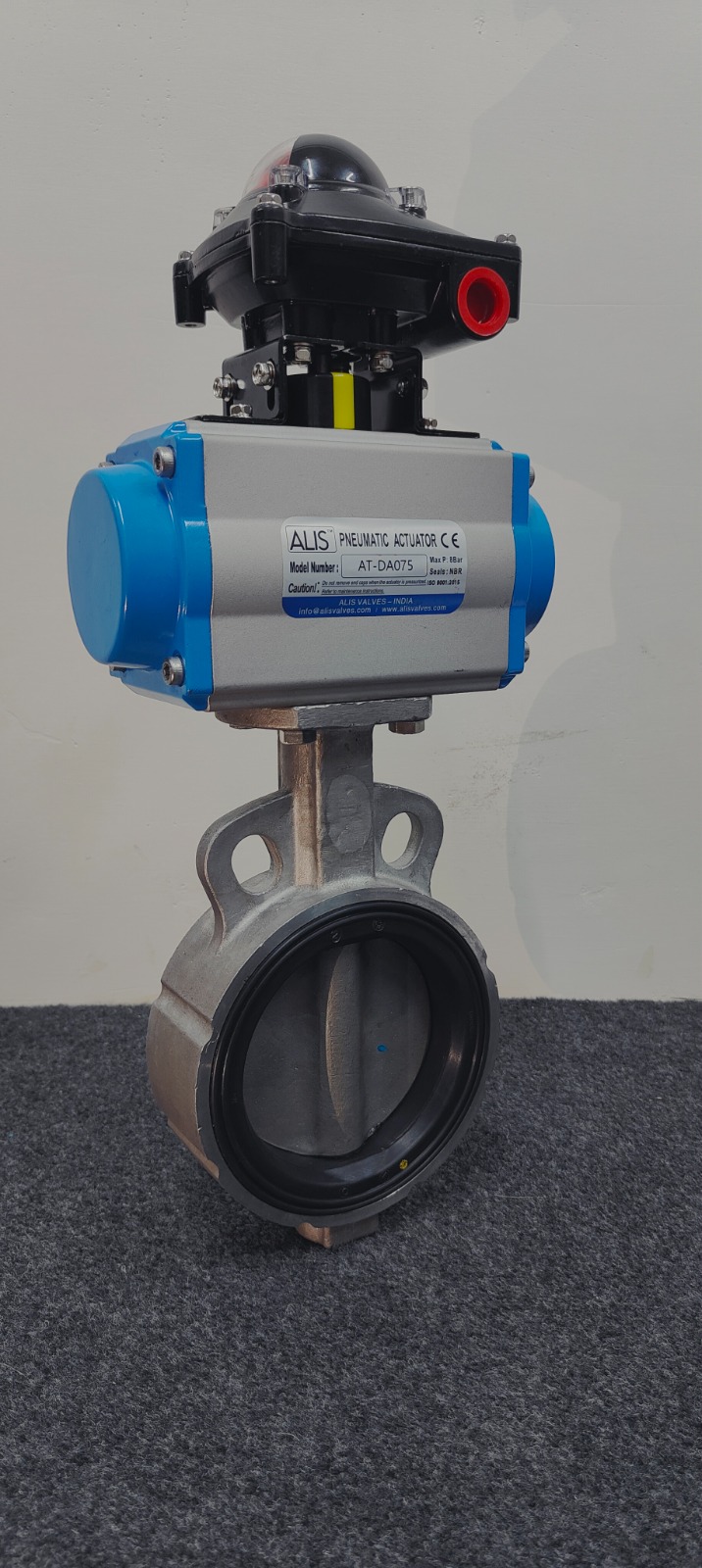
In industrial fluid control systems, ball valves and butterfly valves are two of the most widely used quarter-turn valves. You will know Ball Valve vs Butterfly Valve difference While both perform the basic function of starting, stopping, or regulating flow, their behavior changes significantly depending on the type of actuation used—manual, electric, or pneumatic. Selecting the right combination of valve type and actuation is critical for efficiency, safety, automation, and long-term operating cost. This article provides a detailed comparison of ball valves vs butterfly valves under manual, electric, and pneumatic actuation, helping engineers, plant managers, and procurement teams make informed decisions.
Alis Valves – A Trusted Valve Manufacturer in Ahmedabad, India
Alis Valves is a trusted valve manufacturer in Ahmedabad, India, supplying durable and efficient valves for water, oil, gas, and industrial applications. With a strong focus on quality manufacturing and customer satisfaction, Alis Valves supports projects across India with reliable and high-performance flow control solutions.
Every valve manufactured by Alis Valves is designed to suit Indian operating conditions and is rigorously tested to ensure reliability, safety, and long service life. Our commitment to engineering excellence and consistent quality makes Alis Valves a dependable choice for industrial valve requirements.
Overview of Ball Valves and Butterfly Valves
Ball valves use a spherical ball with a central bore to control flow. When the bore aligns with the pipeline, flow is fully open; when rotated 90°, flow is completely shut off. Ball valves are known for tight shutoff, minimal leakage, and high pressure capability.
Butterfly valves use a circular disc mounted on a rotating shaft. The disc rotates 90° to open or close the valve. Butterfly valves are valued for compact design, lightweight construction, and cost-effectiveness, especially in large-diameter pipelines.
Both valve types can be operated manually or automated using electric or pneumatic actuators, but their performance differs based on torque requirements, sealing behavior, and application conditions.
Manual Actuation: Ball Valve vs Butterfly Valve
Manual actuation involves operating the valve using a lever, handwheel, or gear operator. This is common in systems where automation is not required or where infrequent operation is expected.
Manually operated ball valves provide quick and positive shutoff with minimal effort in smaller sizes. The lever action clearly indicates open or closed position, reducing operator error. However, as valve size and pressure rating increase, operating torque rises significantly, making large ball valves difficult to operate manually without gear assistance.
Manual butterfly valves are generally easier to operate in larger sizes due to lower torque requirements. Gear-operated butterfly valves allow smooth operation even in diameters above 300 mm. However, manual butterfly valves may not achieve the same level of bubble-tight shutoff as ball valves, especially in soft-seated designs.
In manual applications, ball valves are preferred for high-pressure and critical isolation, while butterfly valves are ideal for large pipelines and utility services.
Electric Actuation: Ball Valve vs Butterfly Valve
Electric actuators are widely used where remote operation, automation, and precise control are required. Electric actuated valves are common in water treatment plants, HVAC systems, chemical plants, and power stations.
Electric actuated ball valves excel in applications requiring tight shutoff and infrequent cycling. They are particularly effective in on/off automation where leakage cannot be tolerated. However, ball valves generally require higher actuator torque, especially in larger sizes or high-pressure services, increasing actuator size and cost.
Electric actuated butterfly valves are more energy-efficient and compact. Due to lower torque requirements, smaller electric actuators can be used, making butterfly valves a cost-effective choice for automated large-diameter lines. They also offer better throttling capability compared to ball valves when equipped with modulating electric actuators.
In electric actuation, ball valves are best for critical isolation and safety shutoff, while butterfly valves are preferred for flow regulation and large automated systems.
Pneumatic Actuation: Ball Valve vs Butterfly Valve
Pneumatic actuators use compressed air to operate valves and are preferred in hazardous, explosive, or high-cycle environments due to their fast response and intrinsic safety.
Pneumatically actuated ball valves provide rapid, reliable on/off control and are commonly used in chemical, oil & gas, and pharmaceutical industries. They offer excellent sealing performance and can handle high pressure and temperature. However, pneumatic ball valves require higher air torque, especially for metal-seated or large-size valves.
Pneumatically actuated butterfly valves are highly popular in automated process lines because of their low torque demand, fast operation, and lightweight design. They are well suited for frequent cycling and large-diameter pipelines. While shutoff performance has improved significantly with advanced seat materials, butterfly valves may still not match ball valves in zero-leakage applications.
For pneumatic automation, ball valves are chosen for critical shutoff, whereas butterfly valves dominate in high-cycle, large-line automation.
Torque Requirement and Actuator Sizing Comparison
Torque requirement is a key factor in actuator selection. Ball valves generally require higher breakaway and running torque due to full seat contact and sealing pressure. This leads to larger actuators and higher costs in electric and pneumatic systems.
Butterfly valves have lower torque requirements, particularly in soft-seated designs, allowing the use of smaller and more economical actuators. This makes butterfly valves advantageous for automated systems with size, weight, and budget constraints.
Control, Modulation, and Automation Capability
Ball valves are primarily designed for on/off service. While V-port and characterized ball valves allow limited control, standard ball valves are not ideal for precise throttling.
Butterfly valves offer better flow modulation, especially in mid-open positions. With electric or pneumatic positioners, butterfly valves can provide stable and repeatable control, making them suitable for regulating applications.
Maintenance and Lifecycle Considerations
Ball valves typically offer long service life with minimal maintenance, especially in clean media applications. Seat replacement may require valve removal in some designs.
Butterfly valves are easier to maintain due to simpler construction and fewer components. Seat replacement is often quicker and more cost-effective, particularly in large-size valves.
Cost Comparison Across Actuation Types
In manual operation, butterfly valves are generally more economical in larger sizes. In electric and pneumatic actuation, the cost difference becomes more significant due to actuator sizing. Ball valves tend to be more expensive to automate, while butterfly valves offer a lower total cost of ownership for large automated systems.
Conclusion
The choice between ball valves and butterfly valves under manual, electric, and pneumatic actuation depends on application requirements. Ball valves are ideal for tight shutoff, high pressure, and critical isolation, while butterfly valves excel in large diameters, automation, and flow regulation. Understanding torque requirements, control needs, safety conditions, and lifecycle cost ensures optimal valve and actuator selection for industrial systems.

![Epoxy Curing Agents Market Growth Analysis Report | Industry Status, Market Opportunities, Key Challenges, Competitive Strategies, Revenue Breakdown, and Forecast Outlook [2025–2034]](https://driftelano.com/wp-content/uploads/2025/12/Epoxy-Curing-Agents-Market.jpg)
![EMI Shielding Market Insights and Analysis [2025–2034] | Industry Performance, Growth Opportunities, Risk Factors, Strategic Developments, and Long-Term Market Projections](https://driftelano.com/wp-content/uploads/2025/12/EMI-Shielding-Market.jpg)

![Dimethyl Ether (DME) Market [Latest Reports] | Business Environment Analysis, Corporate Strategies, Competitive Benchmarking, Investment Trends, and Emerging Market Developments [2025–2034]](https://driftelano.com/wp-content/uploads/2025/12/Dimethyl-Ether-DME-Market.png)
Leave a Reply