
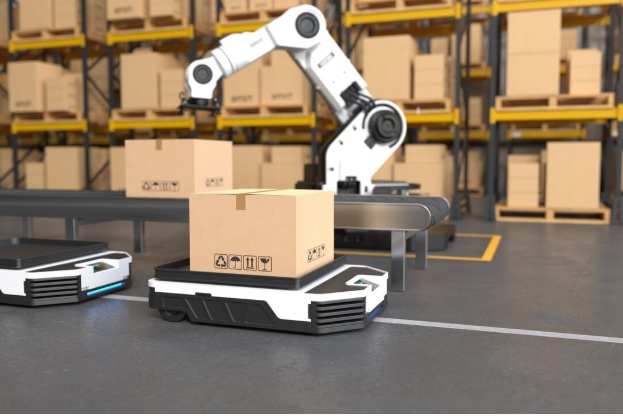
In today’s scenario, warehouses are being imposed under the increasing pressure to execute orders faster with higher precision and at reduced operational cost. The traditional manual picking methods have often failed to meet the required speed expectations due to travel time, labor dependency, and inconsistent performance. Therefore, automatic picking systems have become indispensable tools both in terms of increasing storage rate as well as streamlining warehouse operational mechanisms. These systems also ensure faster picking rates, mitigate the occurrence of human error, and optimise the use of storage space. They guarantee predictable performance even during peak demand.
Automation technology providers such as Addverb design integrated picking platforms to run in conjunction with the intelligent software and robotics. These systems support applications across various industries and types of facilities, helping companies improve operational efficiency by implementing automation-driven workflows. The first and foremost step in selecting the right automated picking technology for a warehouse environment is understanding the different types of automated picking systems.
Goods-to-Person Picking Systems
Goods-to-person systems are one of the most common automated picking systems. The automation devices, rather than the employees, go to the products in this process. This cutting down of the walking distance makes a considerable difference to the operator’s time and thus improves productivity. Shuttle systems, robotic storage modules, and vertical lift technologies are frequently used in this method. They ensure high picking accuracy and are ideal for warehouses with wide SKU diversity or limited floor space.
Pick to Light Systems
The pick-to-light system employs digital indicators that are mounted on the racks or shelves and guide the operators to the exact item’s location. Upon the initiation of an order, the lights come on and show the number of pieces to be picked. The utilization of this system leads to the minimization of picking errors and acceleration of the entire fulfilment process. It is excellent for a scenario where fast-moving SKUs, large order volumes, and areas that rely on visual aids for workflow consistency are present.
Voice Directed Picking
Voice-directed systems use wearable headsets that provide warehouse workers with vocal instructions. A guided direction to the location of items, with verbal confirmation of picks by operators, allows a hands-free environment that’s touted to improve accuracy and enable workers to move more efficiently. This is ideal for warehouses needing flexibility and seeking to increase productivity without major changes to existing infrastructure.
Automated Mobile Robots for Picking
Flexibility and scalability have significantly brought about an increase in the adoption rate of automated mobile robots. These robots navigate within warehouse floors with the help of sensor and mapping technologies, making it feasible for goods to be transported from storage regions to picking stations. Automated mobile robots can be made to coexist with humans and adapt effectively to warehouse variability. The use of automated mobile robots is effectively implemented within brownfield warehouses. Large changes are not feasible within brownfield warehouses.
Robotic Arm Picking Systems
Robotic arms having vision systems, sensors, and specialized grippers can take items directly from bins, conveyor belts, or storage locations. These systems are capable of dealing with a large number of different SKU types and changing their configuration according to the shapes and materials of the packages. Robotic arm picking is appropriate for applications that require high precision and for places that want to achieve even higher levels of automation.
Addverb’s Strategy Regarding Automatic Picking Technologies
Addverb specialises in end-to-end warehouse automation ecosystems that integrate disparate picking technologies together seamlessly. By developing robotics and software in-house, the company ensures seamless coordination between automated picking systems, storage modules, and material movement equipment. Addverb deploys automated mobile robots, goods-to-person systems, robotic picking arms, and intelligent storage technologies to support fast, accurate, and efficient order fulfillment. Their expertise allows businesses to choose and customize the right picking systems for both greenfield and brownfield environments.
How to Choose the Right Automated Picking System
Picking technologies can be properly selected based on some operational factors. First, the diversity of product SKUs could be the most critical issue. Facilities with a large volume of product SKUs may select goods-to-person picking or robotic arm picking, but facilities with a limited number of product SKUs with a high movement rate may select pick-to-light picking. Order velocity will be an influential factor. Facilities with a high number of orders may select automated mobile robots and shuttle-based storage.
Available space, existing infrastructure, and accuracy requirements are some factors that affect the implementation process. Analysis based on workflow patterns, manpower availability, and desirable scalability solutions will assist an organization in arriving at an appropriate automation strategy implementation. The system must be integrated with an efficient software layer.
Conclusion
Automated picking solutions are revolutionizing the operations within warehouses. Whether it is goods-to-person pick modules, pick-to-light solutions, robotic arms, or automated mobile robots, every solution addresses specific needs in different warehouses. Companies such as Addverb are assisting in this process with more intelligent ways of connecting hardware and software that focus on scalable and reliable automated picking. A warehouse revolution demands that selecting an appropriate automated picking solution can be imperative for staying competitive and developing customer satisfaction.

![Epoxy Curing Agents Market Growth Analysis Report | Industry Status, Market Opportunities, Key Challenges, Competitive Strategies, Revenue Breakdown, and Forecast Outlook [2025–2034]](https://driftelano.com/wp-content/uploads/2025/12/Epoxy-Curing-Agents-Market.jpg)
![EMI Shielding Market Insights and Analysis [2025–2034] | Industry Performance, Growth Opportunities, Risk Factors, Strategic Developments, and Long-Term Market Projections](https://driftelano.com/wp-content/uploads/2025/12/EMI-Shielding-Market.jpg)


![Dimethyl Ether (DME) Market [Latest Reports] | Business Environment Analysis, Corporate Strategies, Competitive Benchmarking, Investment Trends, and Emerging Market Developments [2025–2034]](https://driftelano.com/wp-content/uploads/2025/12/Dimethyl-Ether-DME-Market.png)
Leave a Reply